GigCompass
Home › Learn › How to prepare before hiring someone to build your app MVP
How to prepare before hiring someone to build your app MVP
Updated 2026-10-03
We may earn a commission if you hire through links on this page, at no extra cost to you. How we choose picks.
A minimum viable product, or MVP, is the simplest version of your app that lets real users try your idea. Building one through freelancers can be fast and affordable, but only if you prepare well. Most MVP projects that run over time or budget do so because the scope kept growing, the screens were never defined or nobody decided what success looks like. This article walks you through what to prepare before you ask developers for quotes.
1. Define the problem and the user
Write one or two sentences describing who your users are and what problem the app solves for them. This sounds simple, but it guides every later decision. If a feature does not help that user solve that problem, it probably does not belong in the MVP.
2. List features and cut ruthlessly
Write down every feature you can imagine, then sort them into three groups: must-have for the first test, nice to have, and later. Be strict. Login, the one core action and a way to collect feedback are often enough. Payments, social features, admin dashboards and notifications can frequently wait. A smaller scope means a faster launch and a lower quote.
3. Sketch the user flow and screens
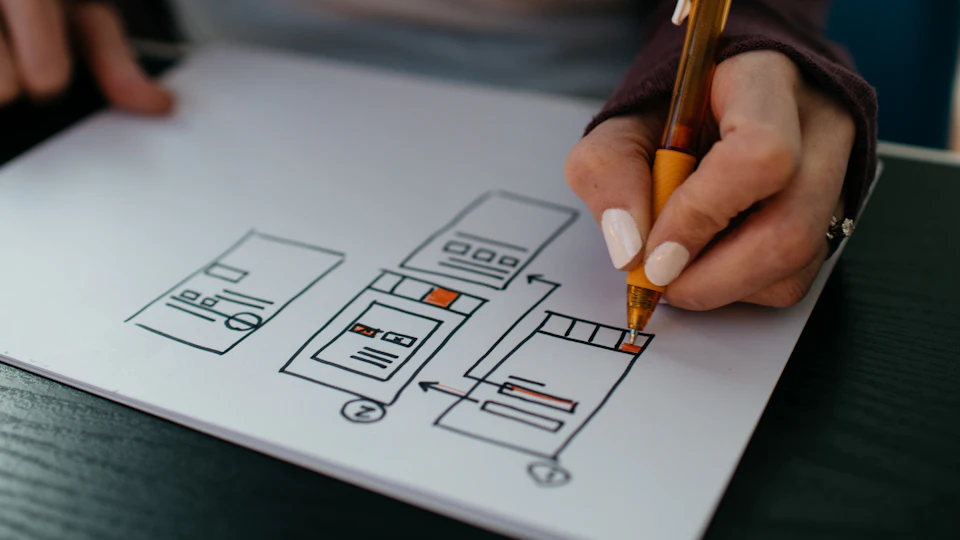
Map the steps a user takes, from opening the app to completing the core action, and sketch each screen. Paper sketches are fine. Better still, hire an app designer or UX designer to create wireframes or a clickable prototype. Developers can then quote against something concrete, and you can test the flow with a few people before any code is written.
4. Choose web, mobile or both
Decide where users will use the product. For many ideas, a mobile-friendly web app is the quickest way to learn. If you need app store presence, device features or notifications, consider a cross-platform app. Our native vs cross-platform article explains the trade-offs.
5. Think about data, accounts and integrations
List the data the app stores, such as user profiles or uploaded files, and any services it must connect to, such as payments, email or maps. Note any personal or sensitive data, because it affects how the app must be built and where data can be stored. Create the main accounts yourself, such as app store developer accounts and cloud hosting, so you remain the owner.
6. Decide how you will measure success
Choose two or three signs that the idea works, such as the number of people who complete the core action, how many return in a week, or how many say they would pay. Ask the developer to add simple analytics so you can see these numbers. An MVP is an experiment; without measures, you cannot learn from it.
7. Set a budget and timeline with room to adjust
Decide your budget range and a target launch date, and keep some budget for fixes and changes after real users try the app. Ask for milestone payments tied to working features you can test, rather than paying everything upfront.
8. Plan for after launch
Launch is the start of learning, not the end of the project. Agree with the developer on a support period for fixing bugs found by real users, and on how changes after that will be priced. Ask for simple documentation that explains how the app is set up, where it is hosted and how to deploy updates, so another developer could take over if needed. Make sure you have admin access to every account, including the code repository, hosting, database and app store listings.
Finally, set aside time to talk to your first users. Their feedback, together with your success measures, tells you what to build next, what to fix and what to remove.
Pre-hire checklist
- Problem and target user written down.
- Must-have features separated from later ones.
- User flow and screen sketches or a prototype.
- Platform decided: web, mobile or both.
- Data, integrations and accounts listed, owned by you.
- Success measures and analytics planned.
- Budget, timeline and milestones agreed.
Share this preparation with two or three developers and compare their questions as well as their quotes. Good developers ask thoughtful questions and may suggest simplifying further. Our MVP development guide covers what to look for in their offers, and user testing can help you learn from your first users after launch.
FAQ
What should an MVP include?
Only the features needed to test your main idea with real users. Everything else can wait.
Do I need designs before hiring a developer?
It helps a lot. Even simple wireframes make quotes more accurate.
Should the MVP be a mobile app?
Not always. A web app is often faster and cheaper for testing an idea.
Who should own the code?
You. Make sure the code is stored in a repository you control.
How long does an MVP take?
Often several weeks to a few months, depending on scope and team.